
'Amílcar' Captures Cabral the Ecologist and Poet but Struggles to Achieve Intimacy
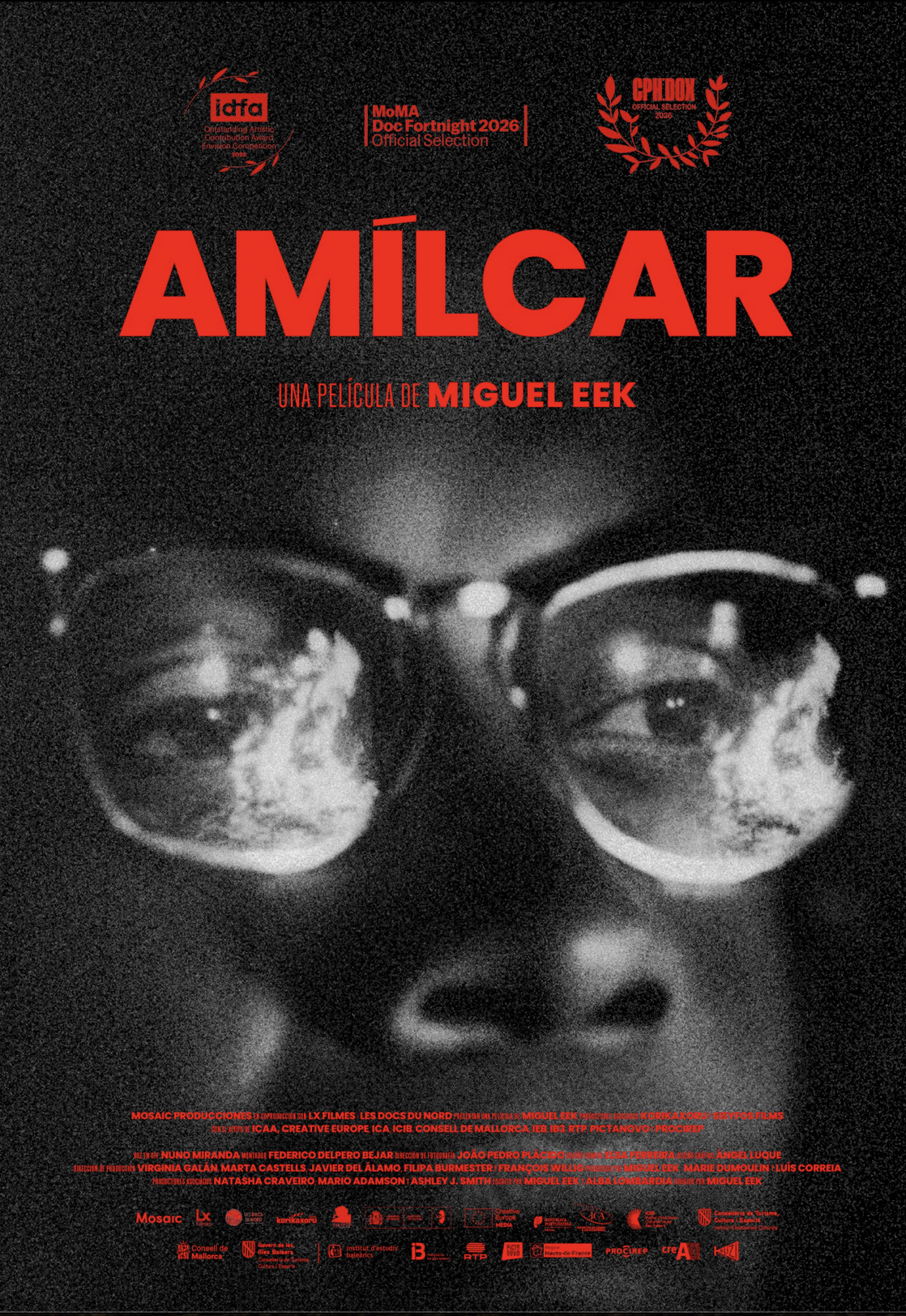
Miguel Eek’s Amílcar brings the agronomist and poet into focus, while keeping the intimate man and the utopian at arm’s length. Cabral’s renewed presence in art, scholarship and popular culture gives this partial portrait a resonance well beyond the screen.
From Pessubé, the experimental agricultural station in Guinea-Bissau he’s assigned to in 1952, Amílcar Cabral describes fruit trees, grassland, and water stored for the dry season. In a letter to Lena, his first wife, he imagines the place as their home. In Miguel Eek’s Amílcar, it is the agronomist’s precision and the poet’s delight we’re first introduced to in the man we seek.
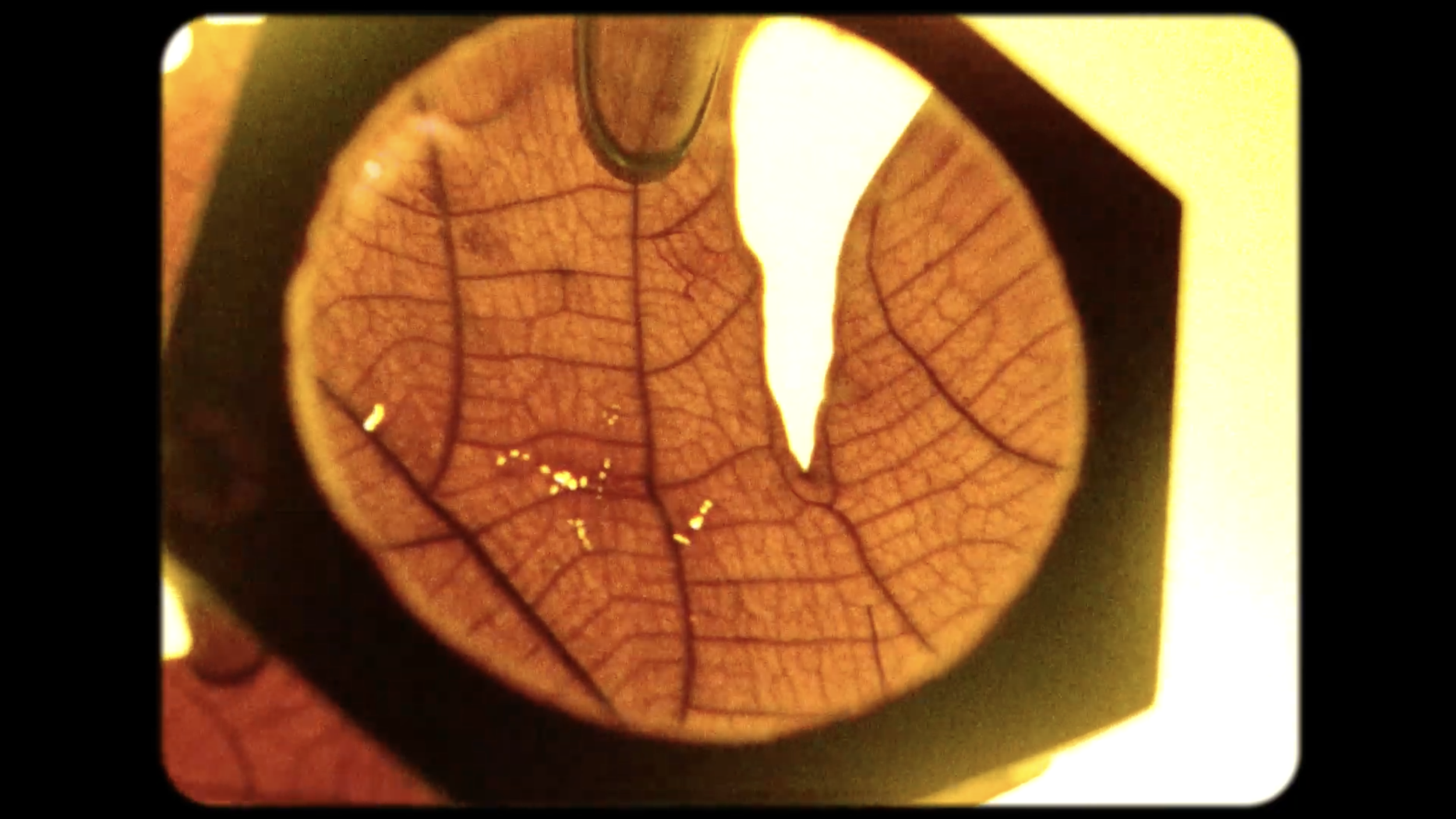
His attention to how things grow opens onto the conditions in which people live. Eek gives this curiosity a fascinating visual and sonic treatment in leaves, bark, fields, and flowing water filmed in extreme close-ups, oversaturated against the sun, with light streaks peeking through, sounds that evoke and amplify the flow of sap. In such scenes, the film’s aspiring proximity to Cabral, and its cinematic artistry, feels warranted.
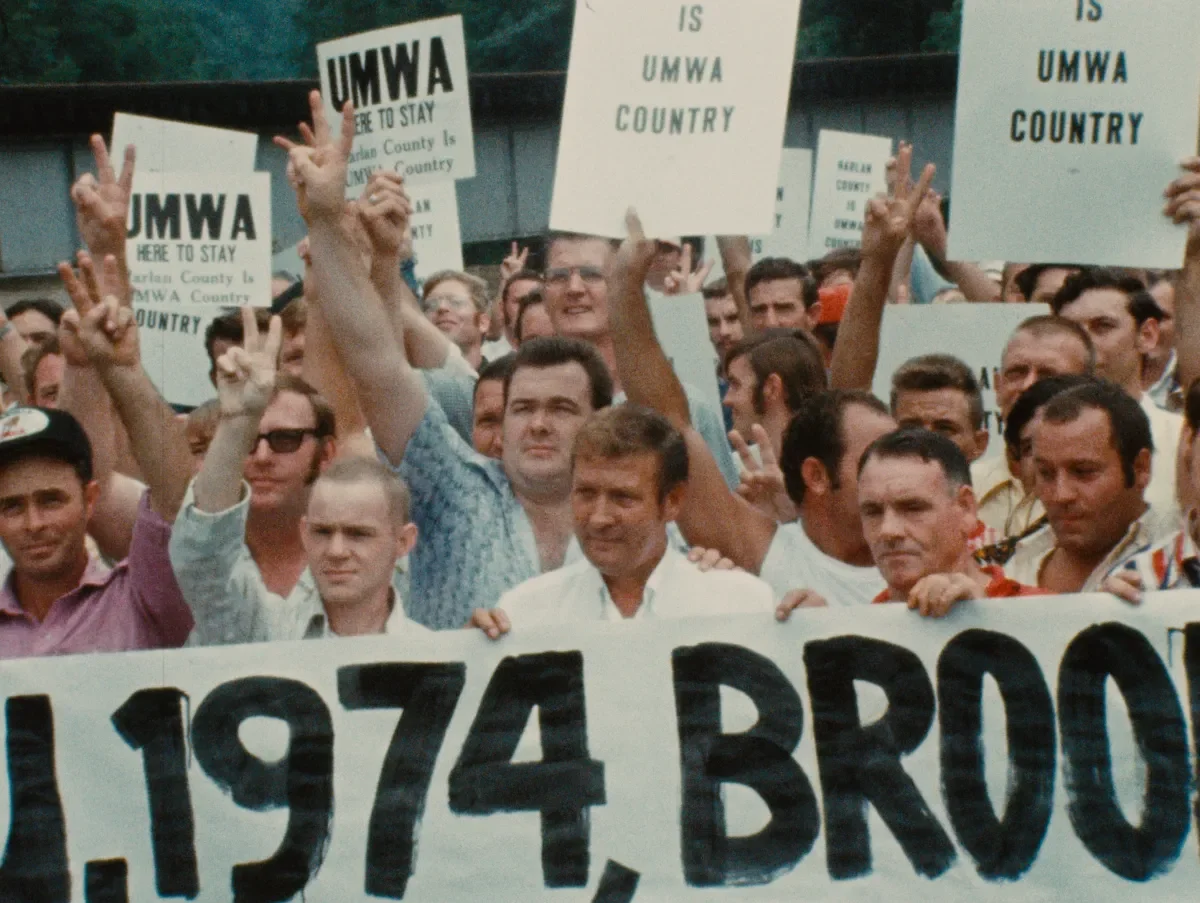
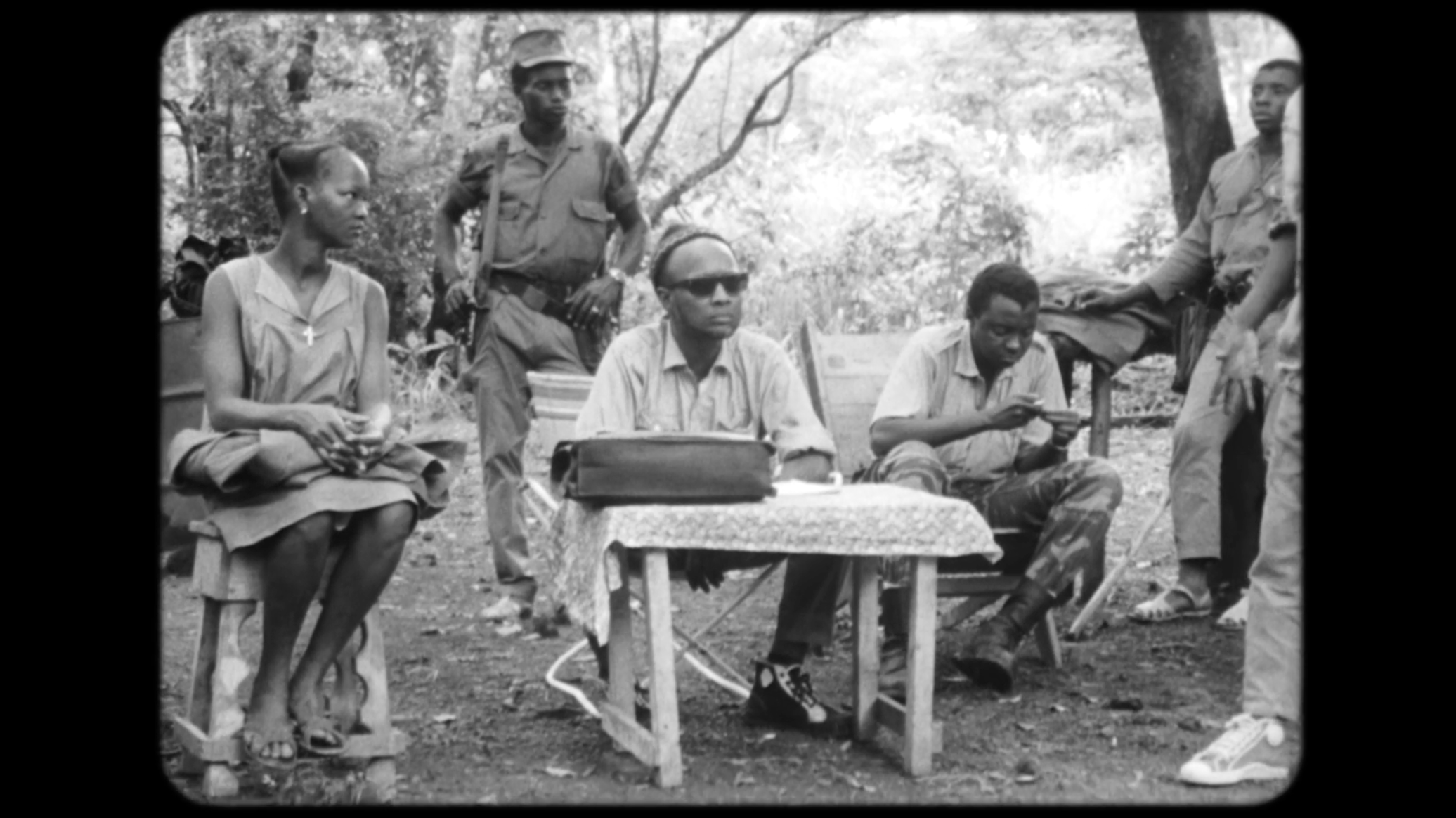
It becomes harder to sustain when the portrait turns to either his intimacy or his political path. Eek, a Spanish documentarian, assembles an imaginary diary from Amílcar Cabral’s private letters, poetry, and political writings, voiced by Nuno Boaventura Miranda. Archival footage meets newly filmed 16mm images, while Portuguese secret-police documents interrupt the voice to appear on screen in black, in silence.
The directorial ambition is compelling: to approach the man within the revolutionary who led the struggle for the independence of Guinea-Bissau and Cabo Verde. Yet the intimacy promised by the title and his correspondence remains elusive. Miranda’s solemn delivery and an elaborate soundscape of scratches, audio texture, and foreboding often keep words at bay. Tenderness surfaces, yes, but then recedes before emotion is allowed enough substance.
Maria Helena, the Lena of those early letters, receives affection, instructions, requests for patience. The many departures demand sacrifices whose consequences remain largely out of frame. She is never heard, never even sensed. In the end, she just disappears; Ana Maria Cabral is suddenly there. The transition between these relationships barely registers in a script interspersed with political goings-on.
That being said, not hearing Lena and Ana Maria isn’t necessarily an issue. Eek’s choice of giving us only Cabral’s voice is a respectable narrative option. But both women remain difficult to imagine beyond what Cabral asks of them and the distant paternal letters both field on behalf of their children, Iva and Raúl. At one point, Cabral writes to Raúl that “this is our people’s struggle; mommy will explain it to you”, outsourcing to Ana Maria both fatherhood and ideology.
Amílcar, the man, remains a spectre.
His political evolution appears similarly fragmented. For instance, the 1959 Pidjiguiti strikers massacre, when colonial forces shot and killed dock workers in Bissau, arrives through archival images, military brass music, gunfire, then the black silence of another secret police report. Landscape and abstract soundscape ensue. Cabral seemingly emerges from it a fully fledged military commander.
Eek gives us successive portraits of the thinker, utopian, commander, diplomat, besieged leader. Yet the experiences shaping and connecting all these facets never quite land, never quite illuminate the tortured soul and the humanity the film desperately seeks.
The police files sharpen this problem. Their silent presentation – a bold directorial stance – gives us time to apprehend the detached bureaucracy of surveillance. At the Pidjiguiti docklands, the report begins with a merchant’s complaint, then describes workers refusing to resume work and arming themselves with oars and harpoons. Their grievances remain crucially absent from the account. Little space is awarded to Cabral’s understanding of the massacre. The colonial account receives our sustained attention.

In footage of the 1972 UN mission to the liberated zones, an emotional Cabral rises to shake hands with the diplomats who had finally supported the cause. This collective achievement briefly brings the private man into view. These moments register more directly than the heavily composed interior voice. It is the portrait – not the man – that struggles to sustain that connection.
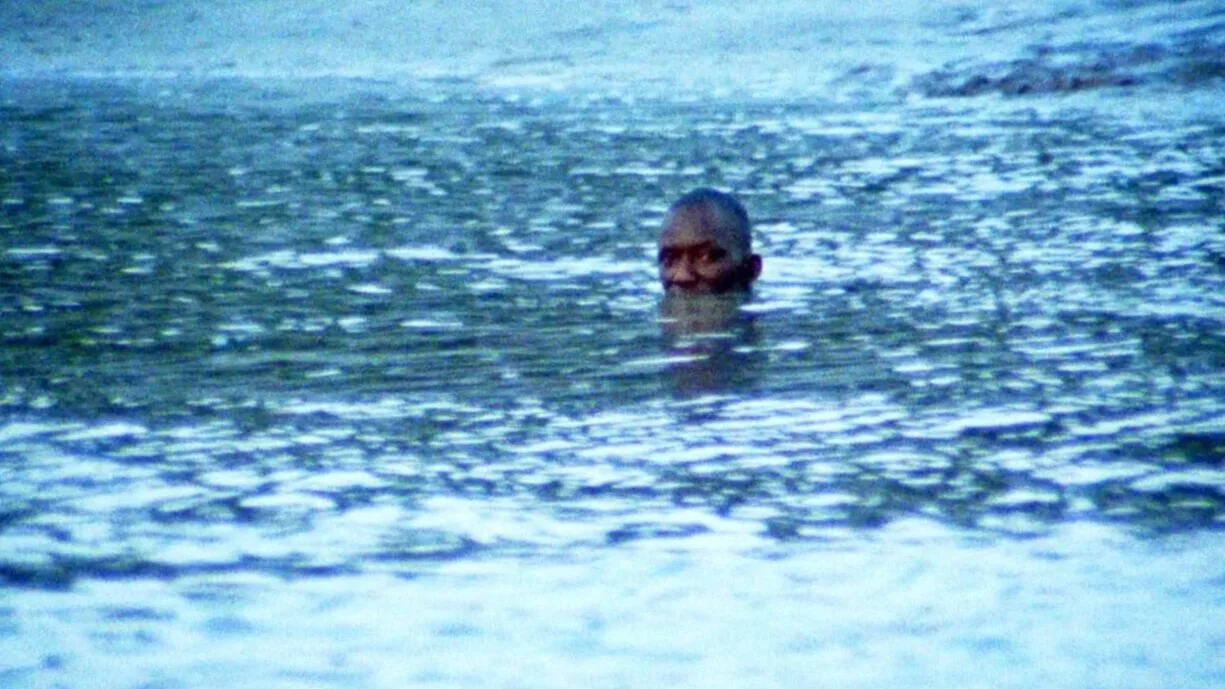
Eek told Dimitra Kouzi he deliberately sought to blur archival and newly filmed material. The result is often engrossing, but leaves me repeatedly (and uncomfortably) uncertain whether I am witnessing an event or its imaginative reconstruction. In one swimming sequence, for example, I’m unable to instinctively, immediately distinguish whether the footage is of Cabral himself or of a figure filmed to evoke him, and that subtle distinction changes how my brain processes it: a surviving moment from Cabral’s life holds a different intimacy from the director’s imagining of one. This distinction is fleeting in the film, which I found slightly unsettling.
Eek is more convincing when that intimacy takes root in Cabral’s passion for the land. His prescient insistence on the inextricability of land, culture and freedom finds echoes decades later in the environmentalist movement: Inuk author and politician Sheila Watt-Cloutier writes in The Right to Be Cold how environmental depredation threatens the transmission of knowledge and culture in the Arctic as in Africa. Across different colonial histories and geographies, the concern is the survival of knowledge and memory through which communities inhabit and shape their inner and outer worlds.
Access to such memories carries immense power. As I have asked before, who could and should use archives, how, with what positionality and responsibility? Eek’s directorial choices are valid and defensible, but nonetheless emerge, as with all of us, from his background, upbringing, perspectives, blind spots, and the privileges of access to funding, international archives, and distribution.
He acknowledges those inequalities. But in the interview with Dimitra Kouzi, Eek mentions that he was “aware that, as a foreign crew, we might arouse the same kind of suspicion that Cabral, as a Cape Verdean, once faced in Guinea.“ In reality, the capacity to shape how this story is seen depended on access to European assets; Cabral’s at-times contested leadership involved mobilizing two nations against colonial domination. The analogy misses the mark.
One year into a meteoric festival tour, Amílcar joins a burgeoning roster of Cabralist cultural production, alive in street art, T-shirts and high fashion, or in the use of his iconic and evocative black-and-white súmbia toque. Choreographer Djam Neguin’s AMI.LCAR and MANSA’s Cabral Cycle exhibition are examples of recent contemporary takes; in academia, Redy Wilson Lima and Miguel de Barros trace his influence on youth movements and hip-hop; the latter’s own work with Guinean NGO Tiniguena connects land, knowledge and collective autonomy following Cabralist principles; while historian Ângela Benoliel Coutinho recovers the memories of women obscured in the liberation struggle - a fitting counterpoint to the film’s elusive wives.
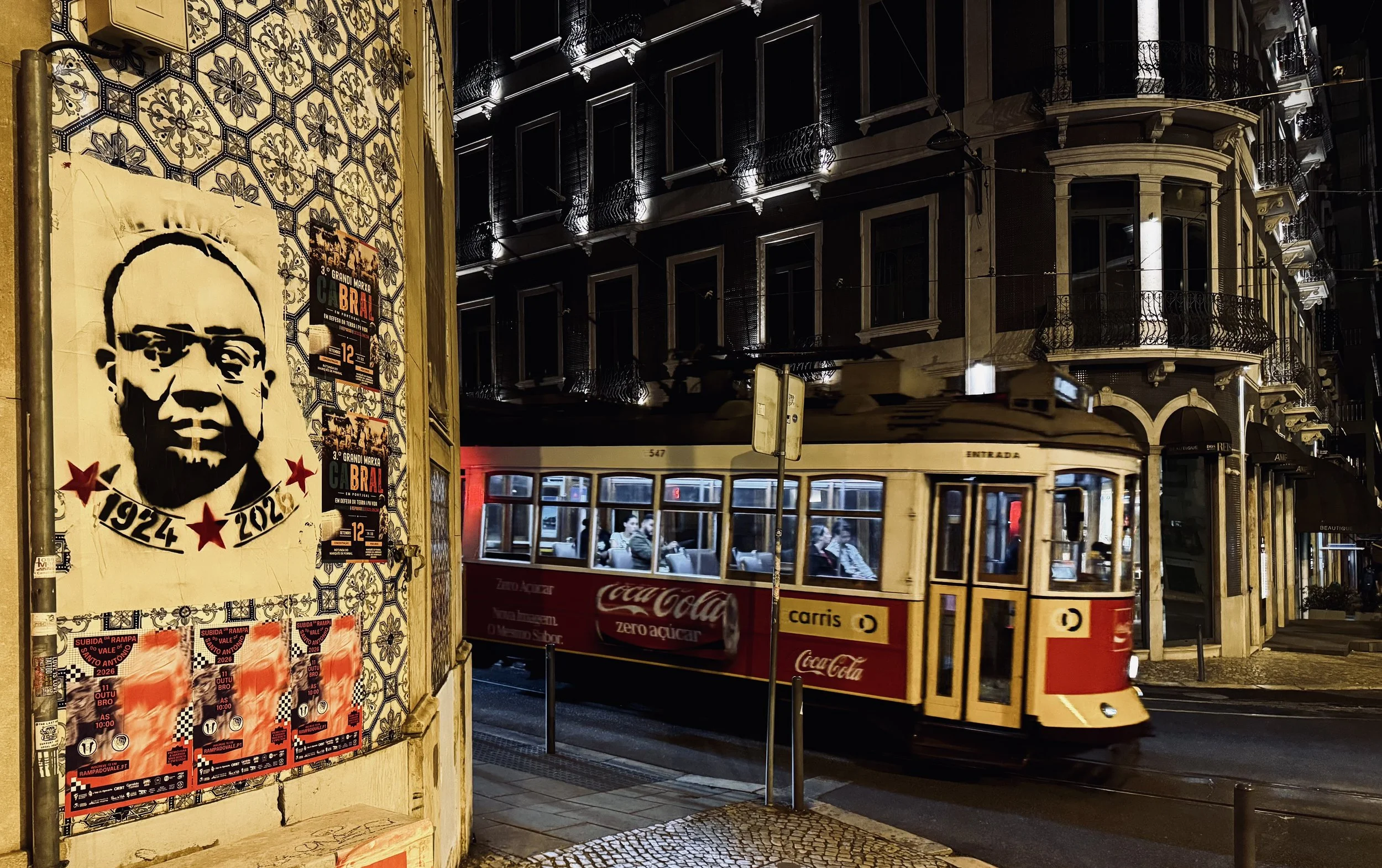
Cabral street art in Lisbon. Credit PJ Marcellino.
Veteran Guinean filmmakers Flora Gomes and Sana Na N’Hada are also developing an archive-based film, with distinctive perspectives and relationships to the material and their communities. Their choices, too, will merit scrutiny.
Eek has certainly created a fascinating glimpse into Cabral, the man, opening up an icon to new international audiences. His film conveys the vitality of one of the twentieth century’s foremost political thinkers, whose ideas continue to convoke something in the present, even as its intimate and political portraits remain insufficiently developed. Amílcar brings his words closer to us than it does the relationships and experiences that gave them force.
For now, the agronomist’s passion and his poetic vein prevailed on screen, convincingly showcasing the interconnectedness of land, knowledge, culture, freedom, and dignity; as to the work of truly understanding the man behind the ideas and ideals – if such is ever even possible – well, we’ve barely scratched the surface.
Amílcar premiered at IDFA in 2025, winning the Award for Outstanding Artistic Contribution in the Envision Competition. It recently premiered in Cabo Verde as the opening film at Kafuka African Film Festival, and in Angola at FIC Luanda, where it received the Best International Documentary Award.
It screens at RIDM, Montréal, Canada, on 20–21 November 2026, and in Porto/Post/Doc’s Cinema Falado Competition on 24–25 November, in Porto, Portugal.