
Luanda Calling: The comeback 11 years in the making
FIC Luanda is back after an 11-year hiatus, with a formidable programme and a city to reconnect to. 12 films offer a way into this encounter between documentary, vérité, and the politics of looking.
Luanda, Angola’s bustling capital city, is making it difficult to stay away. Its international film festival, FIC Luanda, has assembled a programme that could keep a cinephile happily and hopelessly double-booked for six days.
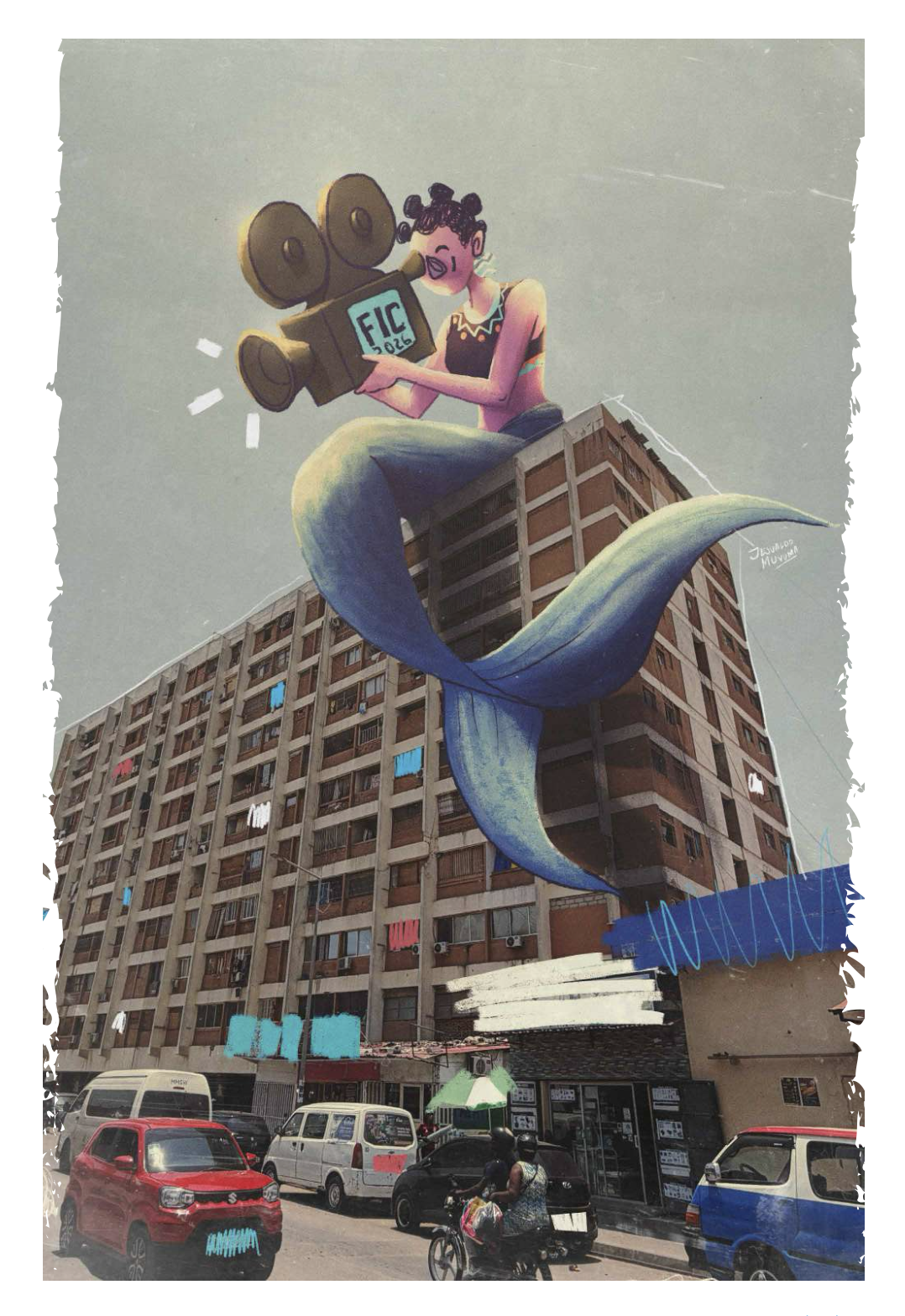
Running from 28 October to 2 November 2026, the festival returns for its eighth edition, after over a decade away. Jorge Cohen of Angolan collective Geração 80 is now the helmsman, with filmmaker Lara Sousa heading the programming, and Kianda – Luanda’s spirit entity – in charge of vibes. More than 100 films from over 20 countries make for an enviable gathering of contemporary cinema in all genres, including fiction bangers like Oliver Laxe’s Sirât (2025) and Akinola Davies Jr’s My Father’s Shadows (2026), and Miguel Eek’s documentary hit Amílcar (2025). Nigeria, the continent’s cinematic giant, is the guest country. Brazil, with which Angola nurtures deep cultural ties, has its own dedicated showcase.
The international names on the billboard are seductive. But it is the unapologetic investment in Angolan cinema that gives this festival comeback its truest purpose.
More than 40 Angolan productions feature across all sections. “Angola will be neither a stage nor a mere spectator,” says Cohen in his festival foreword. Opening film Sapeur: The Great Scam (2026), Dénis Miala’s first feature, follows a mechanic and sapeur whose promise of a house for his son draws him into shady business in Luanda’s Palanca neighbourhood. The 24 Angolan films in competition include a deliciously subversive musical The Adventures of the ANGOSAT (2025) by Marc Serena and Resem Verkron, and Locarno-acclaimed hybrid short Time to Change (2024) by local veteran Pocas Pascoal; while the sections Visit Angola and 50 Years of Independence elevate a treasure trove of old and new titles — including Lucas Fumba’s series-turned-feature Luanda Sem Filtros (Luanda Unfiltered) (2025).
In her curatorial foreword, Sousa describes programming as “creating unexpected encounters” — and her selection makes room for colonial memoir, claims of desire, the struggle to belong, and more.
A useful thread is what we might call fiction vérité: scripted cinema open to the disorder of lived experience, or documentary stepping into the realm of the fictional, depending on one’s outlook. Alongside this documentary-crossover subgenre, there are documentaries using performance, imagined voices or an overtly constructed frame. The diversity of the narrative scaffolding invites a reflection on who gets to decide what another person’s reality looks like, feels like. Angola’s independence struggles, revisited in their dedicated strand, give that question a local historical charge.
This invitation follows a physical geography too: the recently restored Cinemateca Nacional – formerly Cine Alfa – and Cine Teatro Nacional anchor the festival. Cine Zunga takes screenings outdoors at Kinaxixi Plaza; and the new Kia’Ndengue strand addresses younger audiences. Workshops and the LuaLab development programme invest in a new generation of Angolan storytellers. This is a young, filmmaker-led team rolling up their sleeves and taking on the practical work of reconnecting local cinema with the places and audiences that allow it to exist in the first place. It is thrilling and bodes well for Angolan cinema in the coming years.
“Celebrating Cinema, Connecting Stories, Transforming Luanda”, runs the festival’s motto. Granted, that last promise will take longer than six days. And turning this return into a lasting habit of watching films together will be the real test. But for now, Luanda has made a persuasive case for taking Kianda's hand and embarking on this journey. Next time, I want to be there.
Here are 12 films to discover in Luanda:
1. The Bay of Tigers (Baía dos Tigres) (2025) Carlos Conceição
FIC places it in documentary; its producer calls it experimental. A place name whose history and mythology become a dystopian parable in which a character submits to brainwashing to escape memory. This disagreement between labels is quite useful, as Conceição approaches the past through the disturbing possibility of choosing to erase it.
2. The Tree of Authenticity (2025) Sammy Baloji
In what remains of the Yangambi agricultural research station in the Democratic Republic of Congo, scientific history carries the weight of colonial extraction. Baloji’s film essay brings historical voices into a contemporary ecological reckoning, asking us to consider the manner in which the production of knowledge has served the possession of land.
3. The Recce (2026) Daniel Mann
Location footage from Uganda and an exchange with a scout become assets for this short documentary. Scouting a landscape for a film exposes an uncomfortable kinship with colonial surveying. A place risks disappearing beneath somebody else’s imagined territory. Fifteen minutes are enough to put the camera’s supposed innocence under pressure.
4. To the West, in Zapata (2025) David Bim
In Cuba’s Zapata wetlands, Landi hunts crocodiles while Mercedes cares for their son. Survival separates the couple, but domestic life brings them together again. This documentary places strenuous physical labour beside the family intimacy it sustains. In more ways than one, the struggle to provide is equally a struggle to remain a family.
To the West, in Zapata was Visions du Réel’s Special Jury Award winner last year.
5. Put Your Soul on Your Hand and Walk (2025) Sepideh Farsi
Video exchanges connect Farsi with Palestinian photographer Fatem Hassona in Gaza. Their conversation becomes a film, but Hassona’s killing in an Israeli attack in April 2025 changes its meaning irrevocably, becoming a record of her existence. Her image and her words retain particular urgency, and weight – the person living under bombardment, recording them, is now gone.
After coming to tragic fame when it premiered at Cannes in 2025, Farsi’s film continues on its journey around the world.
6. The Kids Are OK (2024) Abba T. Makama
Nigeria’s ALTE scene gathers musicians, designers, skaters and other young creatives around a refusal of conformity. Abba T. Makama of Lagos-based film collective Surreal XVI – which hosts a cult indie film fest of its own – offers up a documentary companion to a music festival betting on a new generation. Style becomes a means of deciding how to inhabit the world, and how to be seen within it.
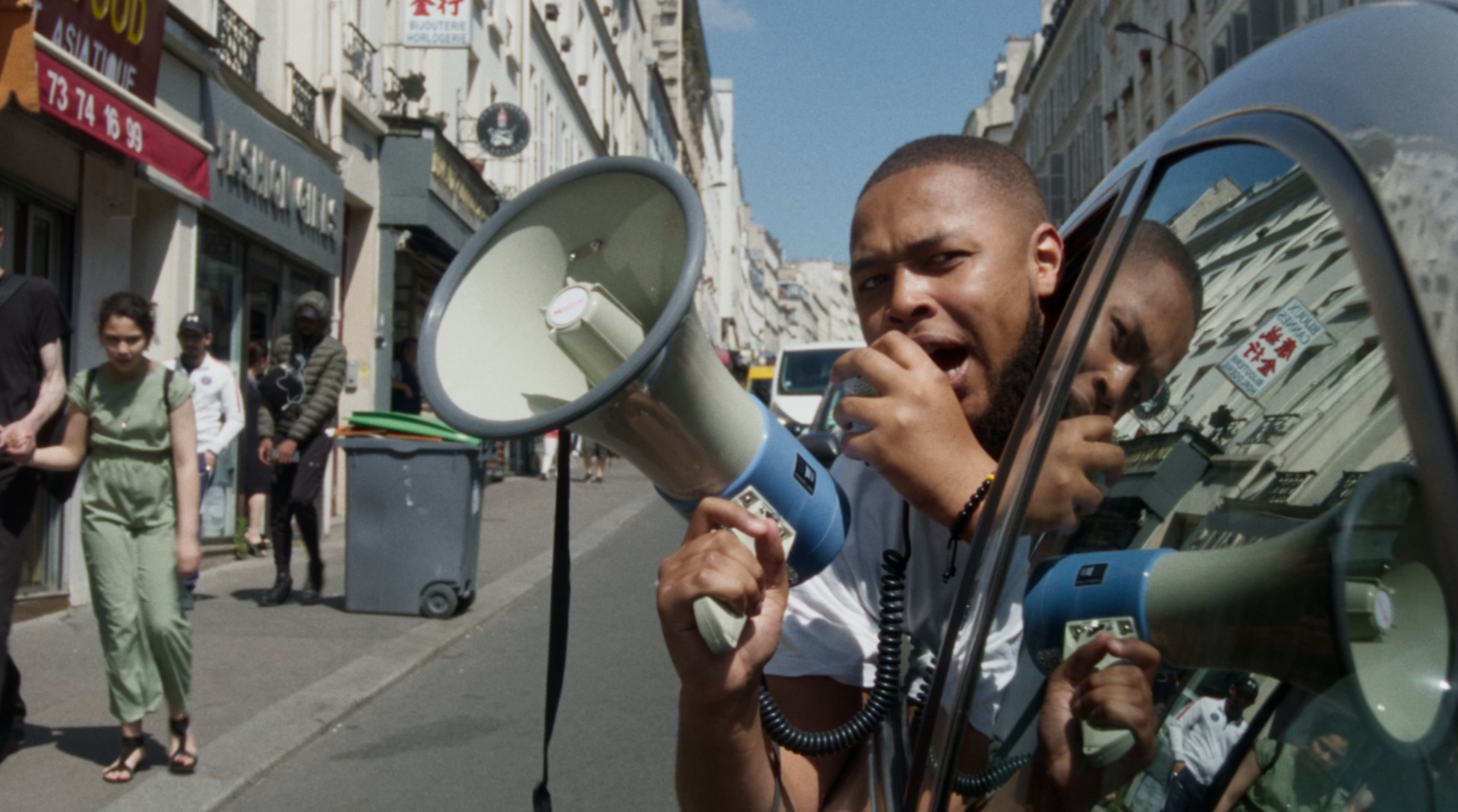
7. Belleville Nous Verra Toujours Danser (2025) Hugo Sobelman
At La Perm’, a community space in Paris’s Belleville neighbourhood, young people find shelter from police scrutiny and room to imagine their futures. Sobelman’s documentary brings the question of belonging back to the scale of a room. Having somewhere to gather is already part of claiming space and taking one’s place in the fabric of the city.
8. Fuckin’Globo (2024) Kamy Lara
In 2015, independent artists occupied rooms in Luanda’s Hotel Globo and turned them into exhibition and performance spaces. Executive produced by Kiluanji Kia Henda, Lara’s documentary follows a movement that grew organically and outside institutional channels. This film is jam-packed with a Who’s Who of Luanda’s art scene, anchoring FIC in a local flavour: artists persevering and finding ever-new ways to make the city available to the imagination.
9. Green Ground of Written Birds (Chão Verde de Pássaros Escritos) (2026) | Sandra Inês Cruz
Angolan writer Luandino Vieira returns to Tarrafal, the prison camp in Cabo Verde where many intellectuals, dissidents, and civic and political leaders were brutally imprisoned by the colonial regime. Confronting memories of his confinement, of Angola’s liberation struggle, and of the purest form of artistic creation – which ultimately enabled him to survive and his words to endure – this Portuguese production explores how a literary imagination was able to bypass censorship and sustain his resistance. As a subject and a stakeholder, Vieira is enthralling.
10. Ghost Elephants (2025) Werner Herzog
Biologist Steve Boyes searches Angola’s highlands for a mysterious elephant herd thought to be almost mythical. A decade-long quest supplies the film with familiar Herzog territory: a landscape, an elusive presence, and the human persistence to find it. Touching, mesmerizing, and sitting alongside the Angolan films in the program, Herzog’s film also invites scrutiny as to what a celebrated film luminary comes looking for in Angola.
11. EH! (2026) Gennesis Ferreira
The title, a ubiquitous Angolan interjection, uttered in a high-pitched chest voice, lands somewhere between the English “Hey!” or “Yo!” – drawing someone’s attention to something uncanny – and “WTF!?”: an apt greeting for a group of foreign documentarians arriving in a contemporary African capital to manufacture the misery they expect to find in a documentary about a contemporary African capital. Hint: Wakanda it is not. This quirky hybrid short, one of the films out of a local film lab, turns its fiction lens on the documentarian’s gaze, and frankly, it seems on point to cap off this list. I hereby declare Gennesis a genius.
12. I Only Rest in the Storm (O Riso e a Faca) (2025)
Ok, while not strictly speaking a documentary, Pinho’s fiction vérité crossover (occasionally quasi-documentary) had its full-length 330-minute Portuguese premiere at DOC Lisboa for a reason. It’s a compelling bonus in this lineup — and a neocolonial behemoth of a film, at a coy 3h30 even in the short version presented in Luanda. A naïve Portuguese environmental engineer travels to Guinea-Bissau to assess a road project, only to be engulfed in the dust of desire and colonial habits, complicating his apparent (yet non-existent) authority and exposing him to the messier question of how he (we) understand(s) the people and cultures around him (us).
Follow us on Instagram for updates and get in touch if you’d like to meet up or collaborate !