
The Power of Taking Online Protest to the Streets
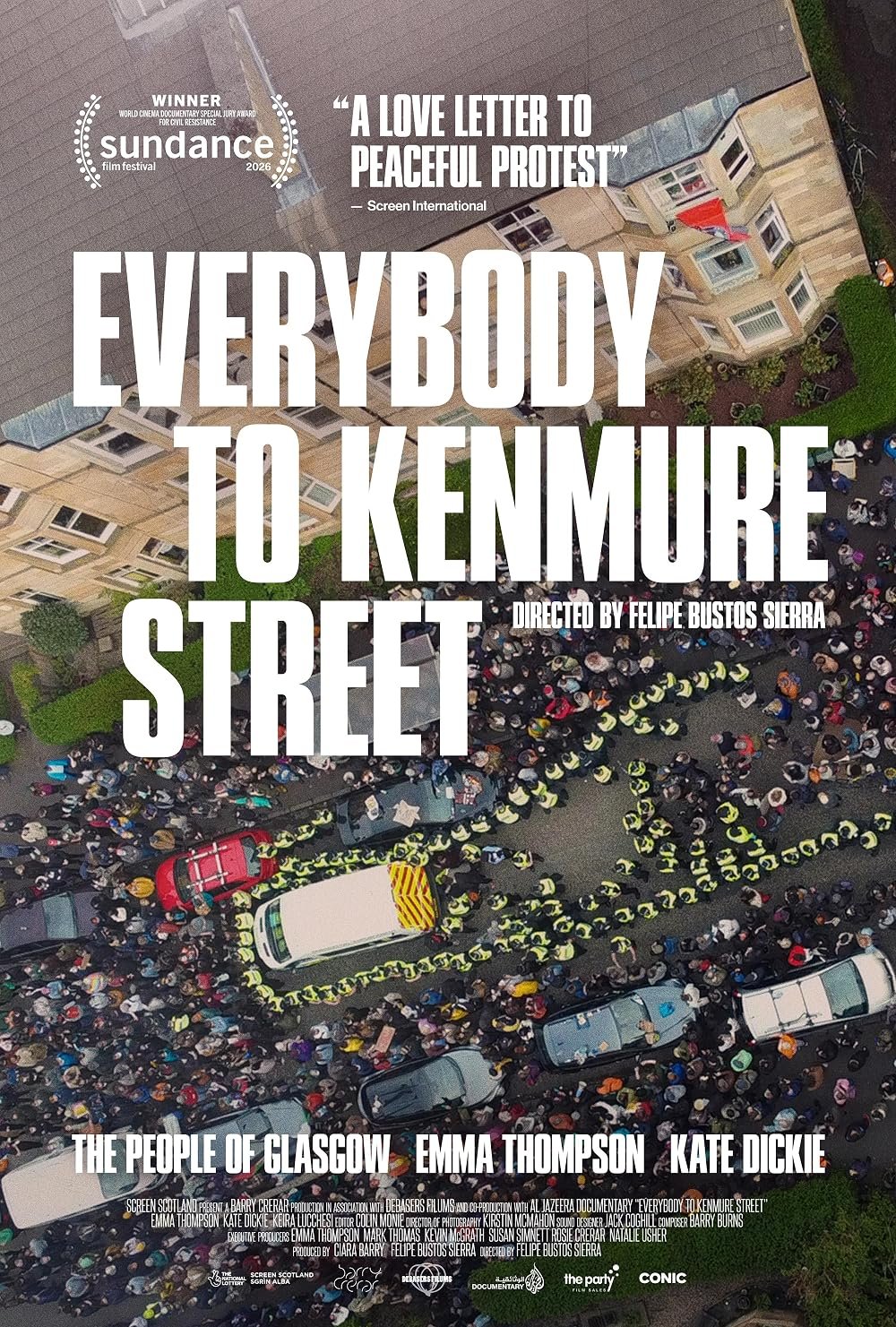
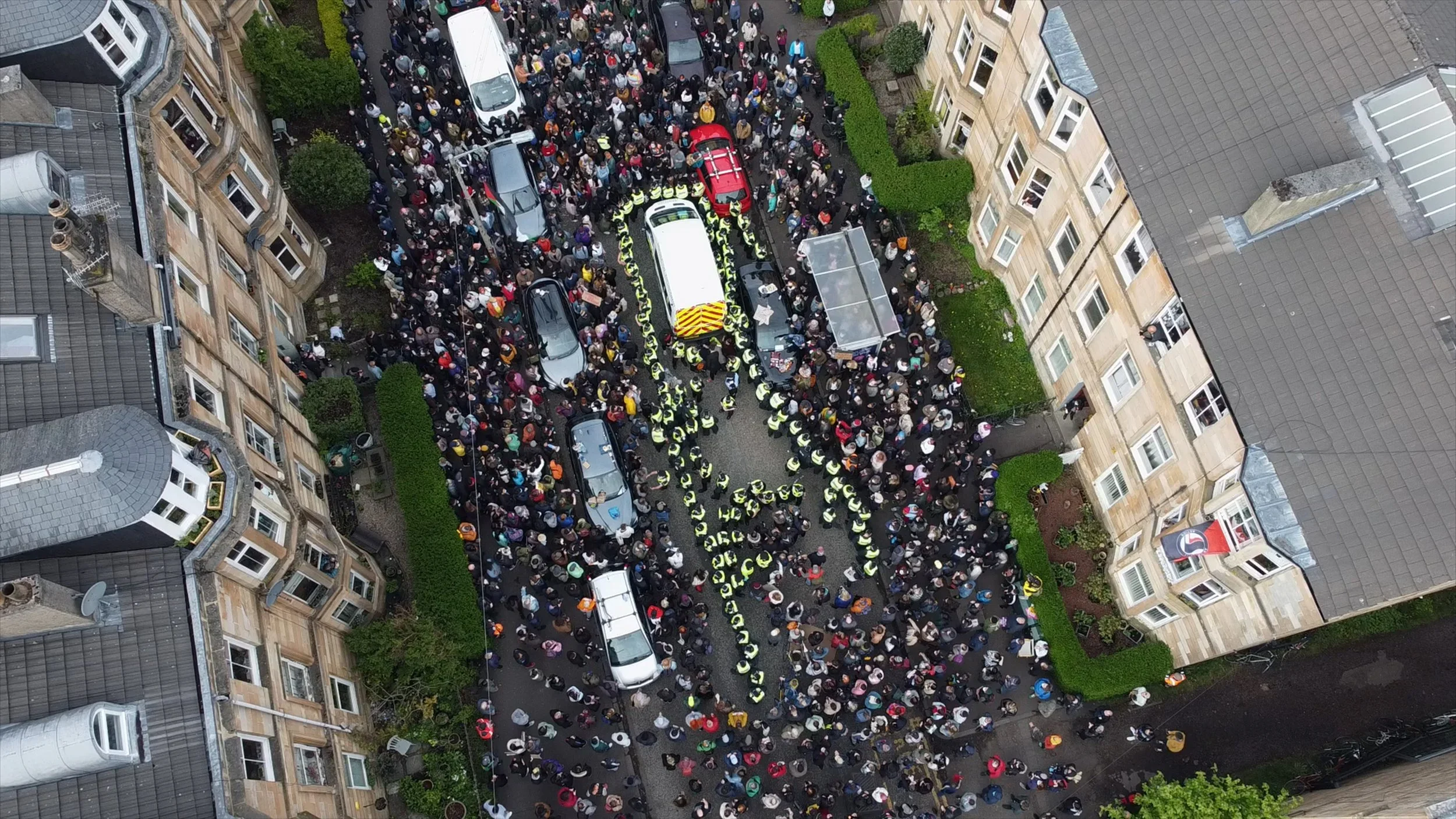
On the morning of 13 May 2021, Felipe Bustos Sierra was ten minutes from Kenmure Street and did not go. Immigration officers had detained two men in Pollokshields, on Glasgow's Southside, on the morning of Eid, and he reshared the messages of alarm, assuming it would be over before he got there. Eight hours later the two men walked free through a crowd of hundreds. Everybody to Kenmure Street is what he did about it. Five years later, after myriad festival selections, including a Special Jury Award for Civil Resistance at Sundance Film Festival and Best Factual Director at the Scottish BAFTAs, I had the opportunity to speak with Felipe Bustos Sierra following his film’s screening at IDFA in the illustrious Best of fests selection.
The son of a Chilean political exile, Felipe grew up surrounded by political activism and solidarity movements. Yet when an extraordinary act of collective resistance unfolded just ten minutes from his home, he stayed away. "Maybe I've gone to enough protests, and that's fine, and somebody else gets to do it," he told me.
Most of the people who turned up had simply come to see what was happening. Few expected to free the men, and for many it was their first protest. As tensions grew, the police began treating the gathering crowd as protesters, prompting some to wonder what being a protester actually means. At one point, an officer asks who the protesters are, only to be met with silence. It's one of the film's funniest moments, captured alongside the rest of the day's confusion through footage recorded by people in the crowd.
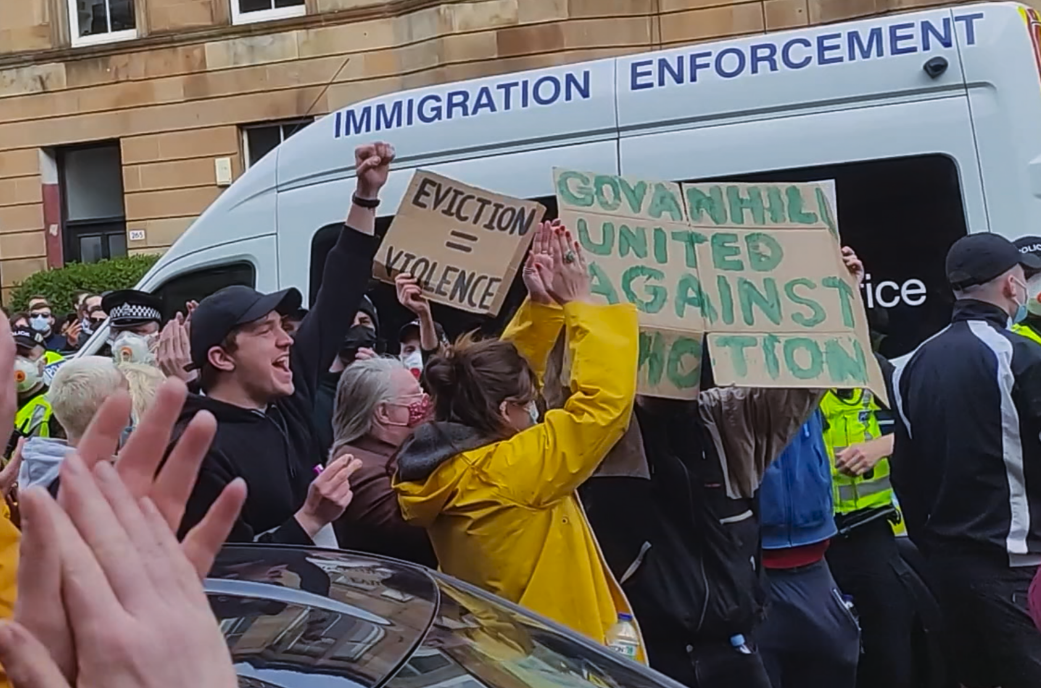
As an immigrant myself, I appreciated how little the film felt the need to explain. Too often, films about migrant communities seem to be made for audiences looking in from the outside. The film never stops to explain Eid, because the residents already know, and one neighbour simply assumed the early-morning noise was about Eid, thinking nothing more of it. While politicians argue over who belongs in Britain, the people on Kenmure Street seem to have little doubt about who their neighbours are.
Felipe was interested in what made people stop watching and join in. A van was about to drive off with two neighbours inside, and people asked themselves how it would feel to look at the empty space they left behind. So they did small things. A man crawled under the van to buy time for people with better ideas. Others brought food and water, opened their toilets and lent phone chargers. As one of the protestors put it: ‘a single act of care led to other acts of care’.
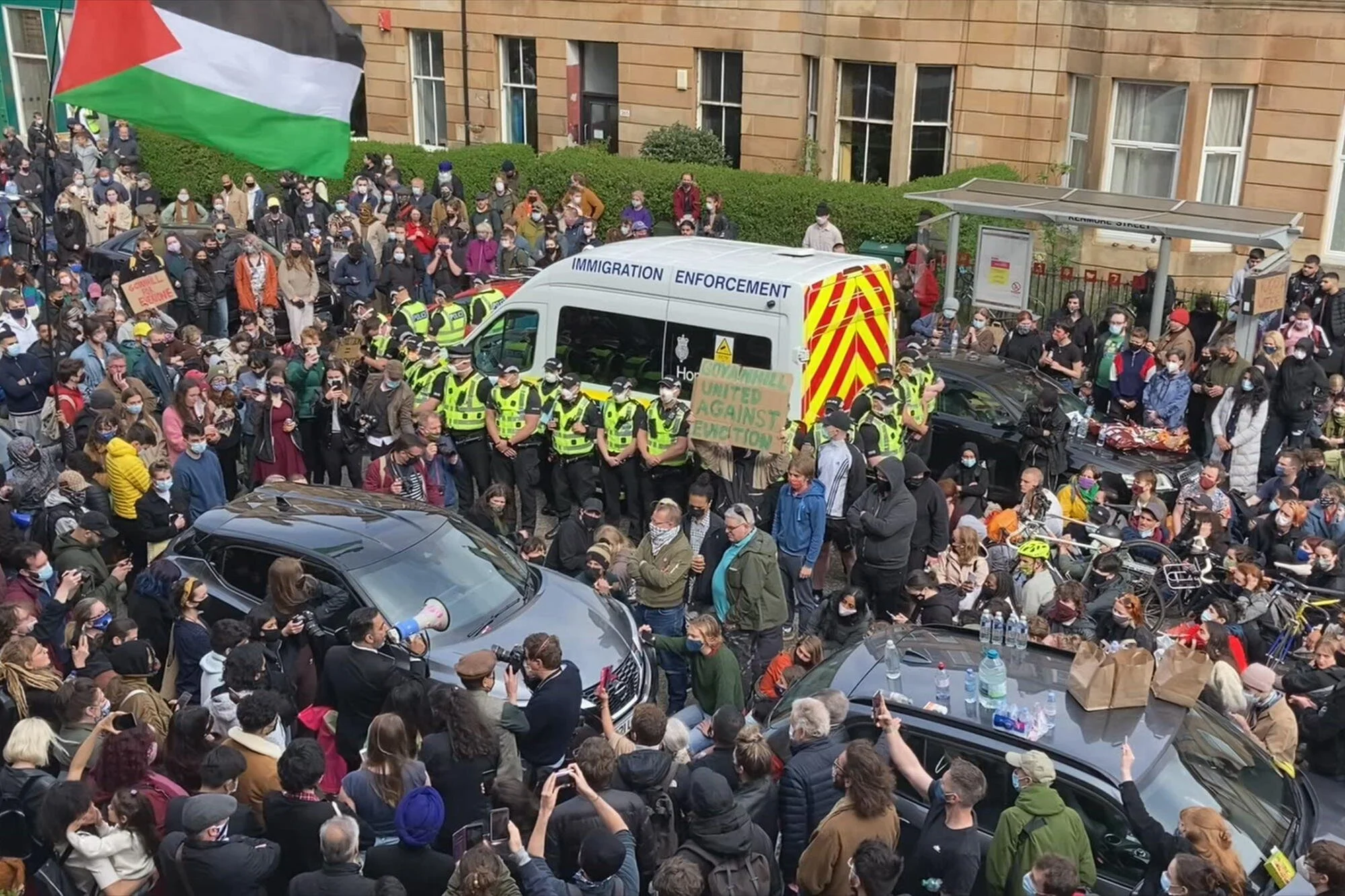
Felipe watched the protest unfold on his phone, something he now reflects on critically. He worries about a politics that lives mostly online, loud on social media and thin on results. But on Kenmure Street, phones were doing something else. Every time the police moved, dozens of cameras went up. "As soon as they moved, there was 100 cameras in the air," he recalled.
Many of those who turned up on Kenmure Street had never protested before. Some did not even think of themselves as protesters until the police told them they were. For Bustos Sierra, who watched it all unfold from home, making the film became what he called a "work of atonement". Watching it, I found myself wondering: what would I have done that morning?
Everybody to Kenmure Street had its World premiere at Sundance Film Festival 2026, where it was awarded the Special Jury Award for Civil Resistance. It has since been selected at CPH:DOX, IDFA, Millennium Docs Against Gravity, Thessaloniki International Documentary Festival, Biografilm and many others.
Felipe Bustos Sierra was awarded Best Factual Director at the 2026 Scottish BAFTAs.
UK audiences can watch Everybody to Kenmure Street on the BFI Player, here.