
Time and Tide Interview : Trials of A Modern Chinese Family
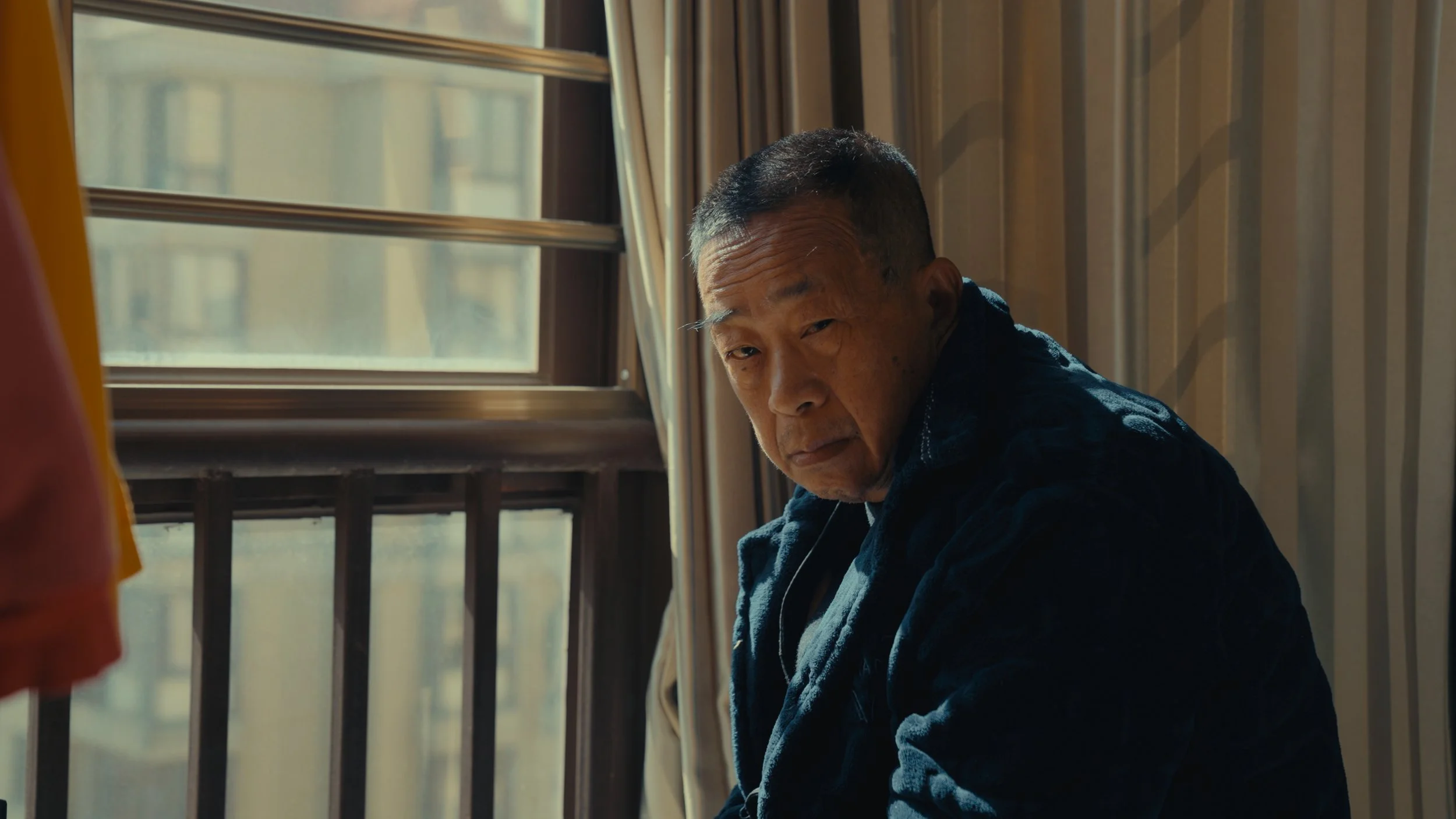
Chinese filmmaker Vee Shi left home at 13 and, in the decades since, has only spent brief stretches of time with his family in Longtian, Fuqing, in southeastern China. His relationship with his father, who moved to Turkey for work when Vee was just three, is particularly strained. When his father suffered a stroke, Vee decided to return to Longtian for a month to make a film about his family.
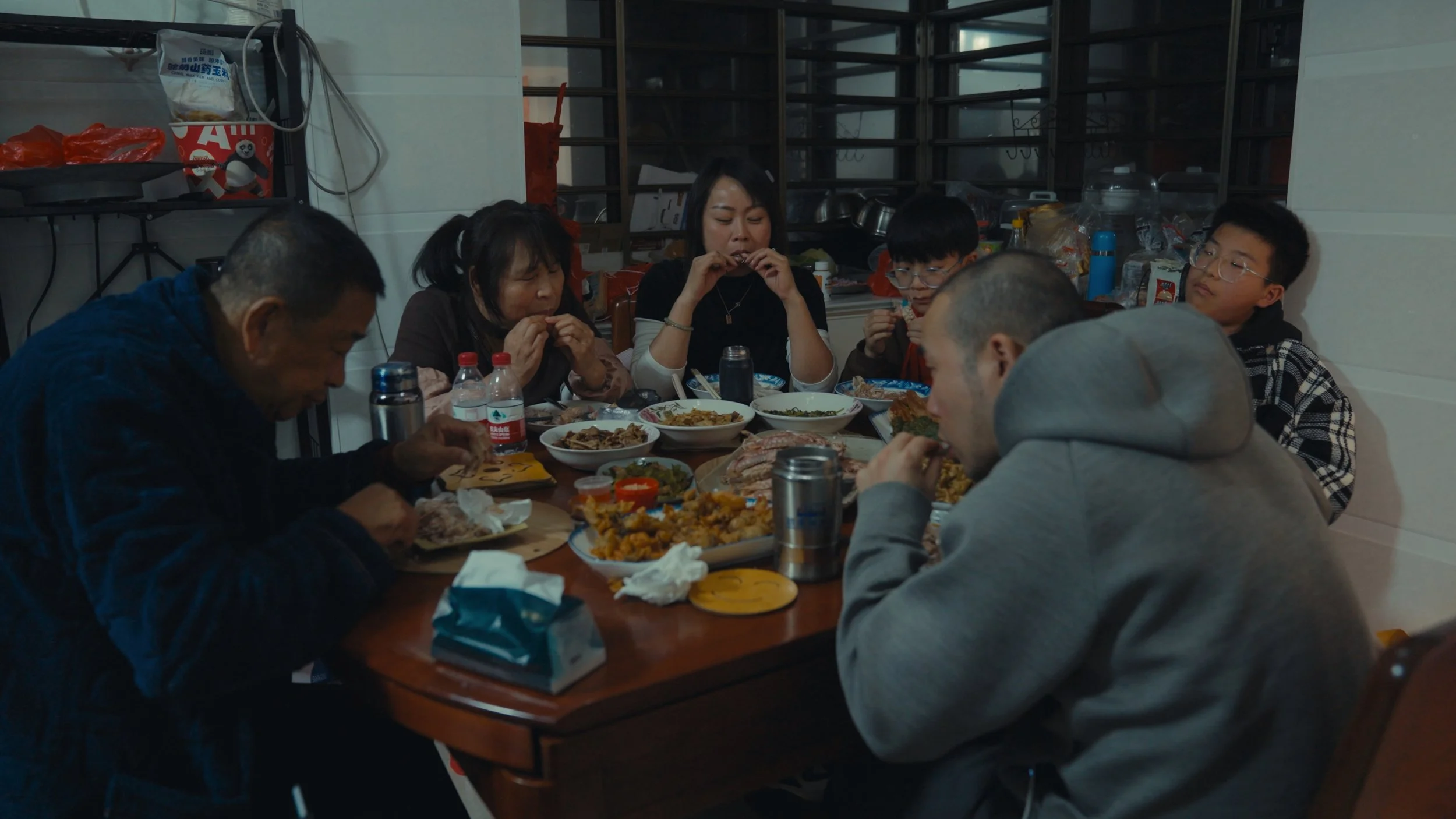
Time and Tide, selected in Visions du Réel’s Burning Lights competition, is the product of his visit home: a raw and intimate fly-on-the-wall portrait of a family in flux, as they grapple with life’s big questions. The camera’s fixed gaze observes highs and lows inside the family home, from the quiet routine of Vee’s nephews doing their homework to the emotionally charged and volatile arguments that erupt across the kitchen table. Vee Shi, his mother, his ailing father and his sister all come into focus as the film reveals the fragile dynamics of their past and uncertain present.
Initially conceived as a fiction film with sci-fi elements, Vee was inspired by Chloe Zhao’s use of non-actors. He wrote a 90-page script about a son going back to his family home in China, envisioning his parents playing fictionalised versions of themselves. I met Vee and Nicholson Ren – his longtime collaborator and Time and Tide’s cinematographer and producer – after the film’s World Premiere at Visions du Réel. Vee explains how the project evolved in a different direction.
VS: Nicholson and I never considered ourselves as documentary filmmakers. That never crossed our mind… We booked a flight in September 2023 to go to China that December. We didn’t have a script, just an idea. I wrote the script and did pre-production with my Mum within that three-month period. It was about a son going home to try and work out what’s happening with his parents and trying to impart change. I thought there was a cinematic quality to that story. Ironically, life doesn’t work like the movies. And nothing changes… That massive argument happened midway through filming. And that really changed how everything worked because we realised that had to be the climactic moment of the film.
In Time and Tide, quiet moments of daily life and reflection are interwoven with raging, climactic arguments and uncomfortable conversations. Our sympathies shift as perspectives change and new stories come to light. Some moments feel so vulnerable and intimate that it’s almost hard to believe that this is nonfiction, and that Vee and his family would allow such unguarded access to their inner lives. The only person who appears to hold their cards slightly closer to their chest is Vee himself. I ask if his role as the filmmaker had any impact on his approach in front of the camera.
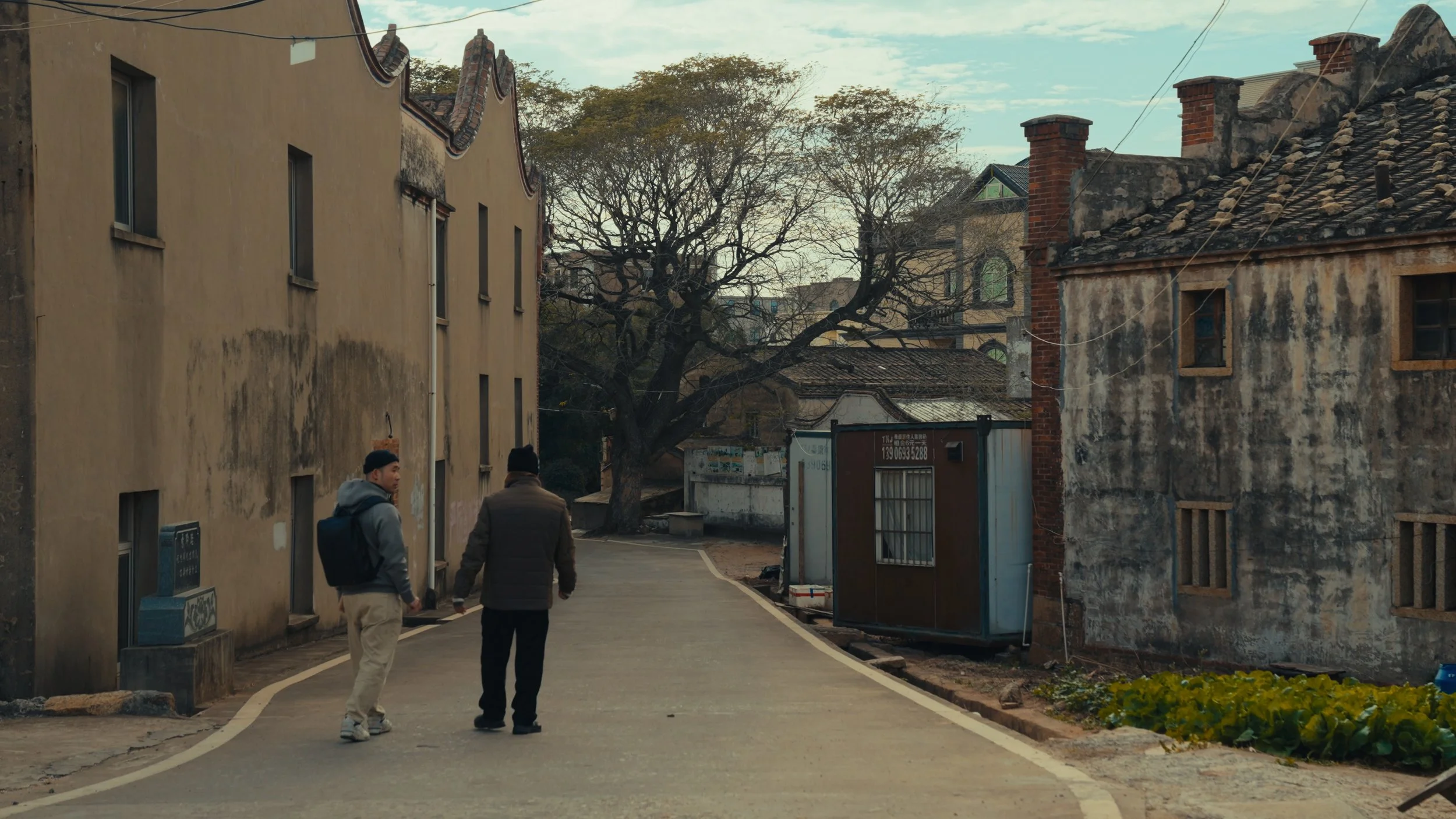
VS: Obviously, I had to be natural and part of the scene. But at the same time, I was thinking about the narrative. How do I guide the conversation in a way that doesn’t feel manipulative or forced? But still serves the narrative purpose. At the same time, because the camera was locked off, I had to be mindful of where [my family] was going. And whether they were blocking the camera.
Fixed shots from inside the domestic space are precisely framed by Nicholson Ren, who lived alongside Vee and his family during the month-long filming. The action unfolds with the natural and lived-in sense so characteristic of cinema verité. Glimpses of the outside world are welcome moments of relief from the insularity of the domestic space. Shots of bustling markets and Vee’s mother’s dance group provide a glimpse into collective life outside the home, a small but vivid pocket of life in Longtian. As the filmmakers note, this is one the first films to be shot in the region, which imbues the images with an added sense of discovery. Nicholson cites the wide, unmoving shots from Apichatpong Weerasethakul’s Memoria (2021) as one of their visual references going into filming.
NR: I had to try and find a way to keep the [framing] interesting each time because there were so many scenes in the kitchen. I wouldn’t know where they’d be moving or what they were going to do so I had to give myself the widest angle possible. We’d set up the camera and then I would be in the lounge room watching on the iPad. Vee would be inside the kitchen with his family and we’d just let it roll. We’d do that almost every day and nearly every mealtime. Sometimes the camera would roll for 12 hours a day. We wanted to set up the camera and make them forget about it.
Time and Tide may zoom in on the minutiae of one family, but it also speaks to broader themes of familial responsibility and the pressures of contemporary Chinese society, particularly through the story of Vee’s sister, Liyun. We learn that Liyun – who now bears the brunt of her father’s caretaking duties – was given up for adoption during China’s one-child policy. Her story also reflects the realities of the country’s migrant labour system: Liyun works in a sea cucumber shop in Guangzhou while her sons remain with their grandparents, not allowed to join her in the city. These details point to the way structural constraints and economic necessity can fracture family bonds in modern China .
Time and Tide arrives amid a small wave of contemporary Chinese cinema exploring the domestic sphere. Elizabeth Lo’s Mistress Dispeller in particular springs to mind, which unfolds with a similar extraordinary level of access. It’s hard not to watch Time and Tide and see echoes of one’s own life and family. While Vee’s family come to the film with their own very specific problems and histories, its universality and resonance transcends borders. I ask Vee if he had any inhibitions in showing such intimate moments on screen.
VS: I think the last scene in the kitchen. It was so unplanned - I didn’t know that was going to happen. My sister is more aware of the online space, so I did tell her that we’d filmed that and it was going to end up in the film. She was okay with that. But the whole time, the larger part of me as a filmmaker was thinking that stories like this aren’t being told on screen. Because it’s uncomfortable, and because people don’t talk about it, it’s more of a reason to show it.
Time and Tide was selected in Visions du Réel’s Burning Lights competition where it had its World premiere.
The film is produced by Nicholson Ren (Niu Studios) and Vee Shi
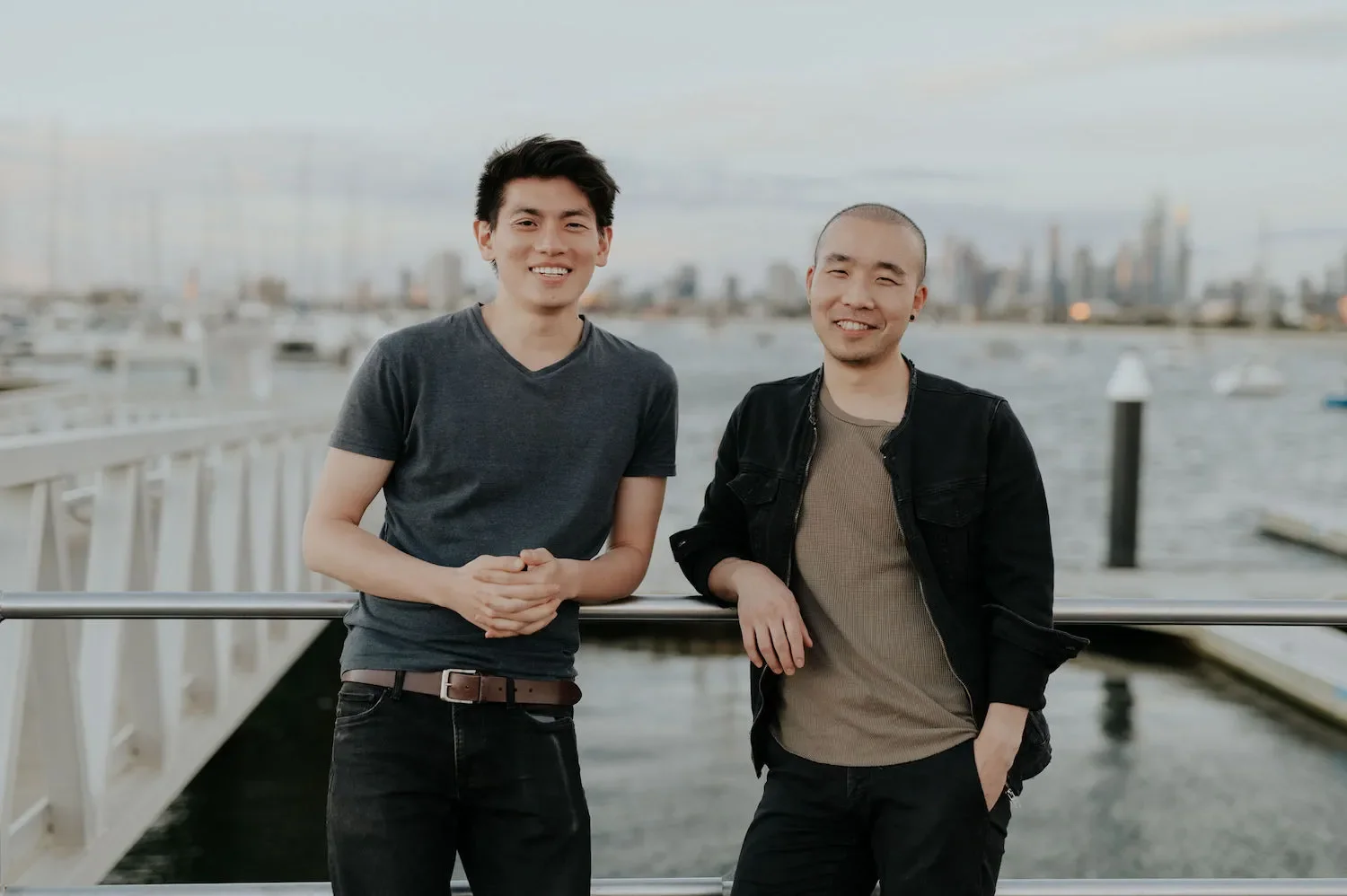
Cinematographer and producer Nicholson Ree and Director Vee Shi